
-

- Inspiration Hub
- Interactive Tools
- Humm Finance
- Humm Finance
- Interior Design
- Sustainability
- Furniture Store of the Year 2025
- Podcast
- Care Plan
- About
- 38 Years In Business
- Wishlist
- Inspiration Hub
- About
- Interactive Tools
- 38 Years In Business
- Care Plan
- Podcast
- Sign in
- Find a Store
- Order direct: 0818 776688
- Contact us
- About us

 PROUD TO
  38 YEARS
 NATIONWIDE



-

- Garden Clearance
- Garden
- Garden
- Type
- Material
-
FREE DELIVERY on all garden furniture
- Sofas
- Chairs
- Tables
- Bedroom
- Mattresses
- Storage
- Storage by Type
-
- Accessories
- What's New?
- New In
-
- Special Offers
- Shop by Room
- Dining
- Living
-
- Brands
- Christmas Decorations
- Christmas Tree Decorations
- Tableware
- Christmas Candles & Candle Holders
- Soft Furnishings
- Store Locator
- Wishlist
- Humm Finance
- Inspiration Hub
- Interior Design
- Gift Card
-
Looking for the perfect gift?
Surprise someone special
with a gift card Buy Gift Card
 Check Your Gift Card Balance
-

- Gift Card
-
Looking for the perfect gift?
Surprise someone special
with a gift card- Buy Gift Card
- Check Your Gift Card Balance
-
- Podcast
- Sustainability
- Room Designer
- 37 Years In Business
- Sign in
- Find a Store
- Order direct: 0818 776688
- Contact us
- About us
Velvet Furniture Buying Guide
Velvet Furniture Buying Guide
Velvet furniture has shifted from a purely decorative choice to a practical one. Improvements in fabric technology mean it is now widely used in everyday homes, not just formal spaces. Still, quality varies significantly, and the term “velvet” alone tells you very little about how a piece will perform.
This guide walks through what velvet is, how it behaves, and what to look for before buying.
What Is Velvet Furniture?
Velvet refers to the way a fabric is woven rather than the material itself. It has a short, dense pile that creates a soft texture and a subtle change in colour depending on how light hits it.
The fibre used in the weave determines how the furniture will feel and wear over time.
Common types include:
- Cotton velvet, known for a soft, matte finish but lower durability
- Polyester velvet, widely used for its strength and affordability
- Performance velvet, designed for stain resistance and frequent use
- Silk velvet, a high-end option that is rarely practical for everyday furniture
For most homes, polyester or performance velvet offers the best balance of comfort and durability.
Why Choose Velvet Furniture?
Velvet stands out for its depth of colour and texture. It tends to make even simple furniture shapes feel more considered and finished.
It also performs better than many expect. Modern velvets are more resistant to wear and easier to maintain than older versions, especially when made from synthetic or performance fibres.
That said, it is not a flat or uniform material. It shows shading, marks, and movement across the surface. This is part of its appeal, but not everyone enjoys that lived-in look.
What to Look for When Buying Velvet Furniture
Fabric Type and Durability
Start with the composition of the velvet rather than the colour or style.
Check the Martindale rating:
- Around 25,000 rubs is suitable for everyday domestic use
- 40,000 or higher is better for busy households
Performance velvet is usually the most reliable option if durability is a priority.
Pile and Finish
Velvet has a directional pile, often called the nap. This affects how it reflects light and how it responds to pressure.
You should expect:
- Variations in tone depending on angle
- Temporary marks where the fabric has been pressed
These are normal characteristics, not faults. If you prefer a completely even finish, another fabric may be a better fit.
Comfort and Cushion Filling
The feel of velvet furniture is shaped more by the cushion construction than the fabric itself.
Glass-top dining tables:
- Foam gives a firmer, more structured seat with minimal upkeep
- Feather or down creates a softer feel but needs regular plumping
- Hybrid fillings offer a balance between support and comfort
Choosing the right fill matters as much as choosing the right fabric.
Maintenance and Care
Velvet is not as delicate as it is often assumed to be, but it does require consistent care.
Typical maintenance includes:
- Vacuuming with an upholstery attachment
- Light brushing to maintain the pile
- Prompt attention to spills
Performance velvets provide added protection, but no fabric is completely resistant to stains.
Choosing the Right Velvet Furniture for Your Space
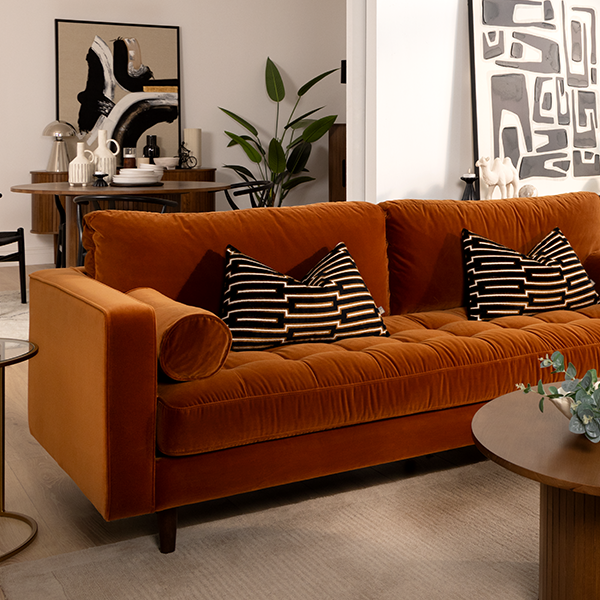
Velvet Sofas
A popular choice for living rooms, offering both comfort and visual impact.
Look for durable fabric, supportive cushions, and a solid internal frame. Deeper seats and slightly firmer cushions tend to age better.
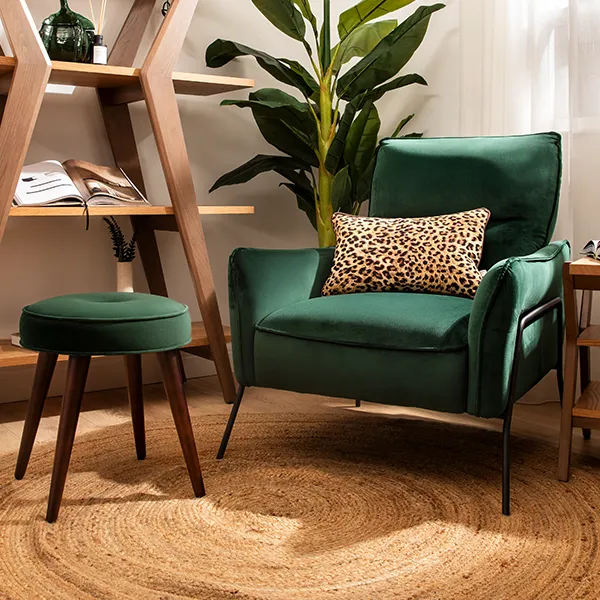
Velvet Armchairs
A practical way to introduce velvet without committing to a full sofa.
They work well for adding colour or texture and are easier to maintain due to lighter use.
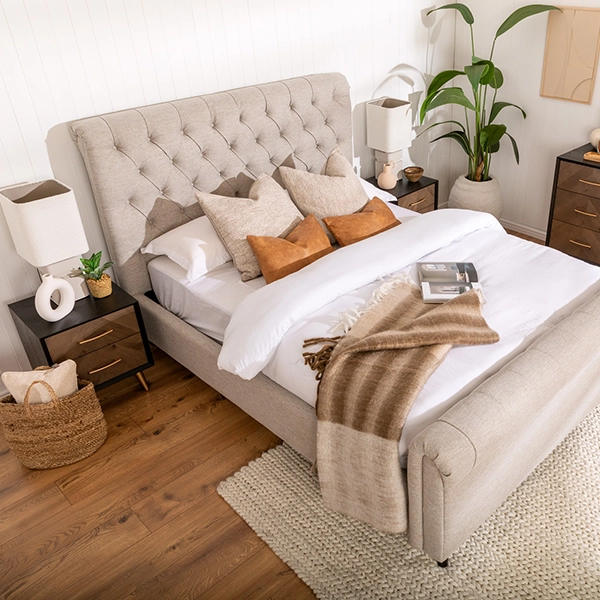
Velvet Bed Frames
Still widely used, but quality can vary.
Focus on adequate padding and a strong base. Thin upholstery or weak slats often lead to early wear.
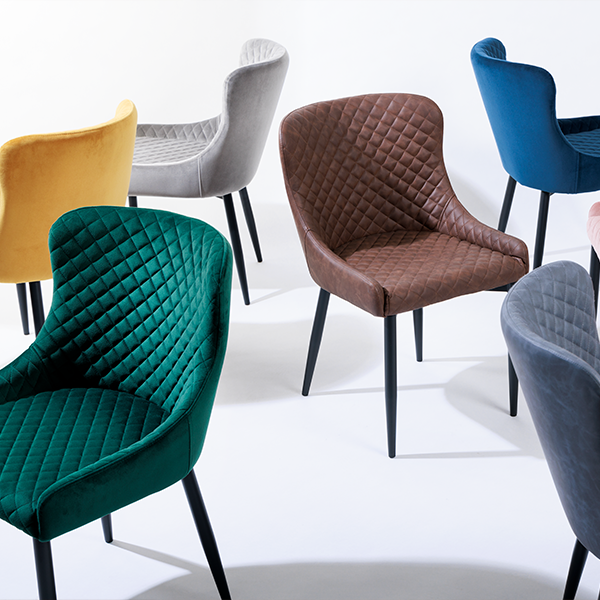
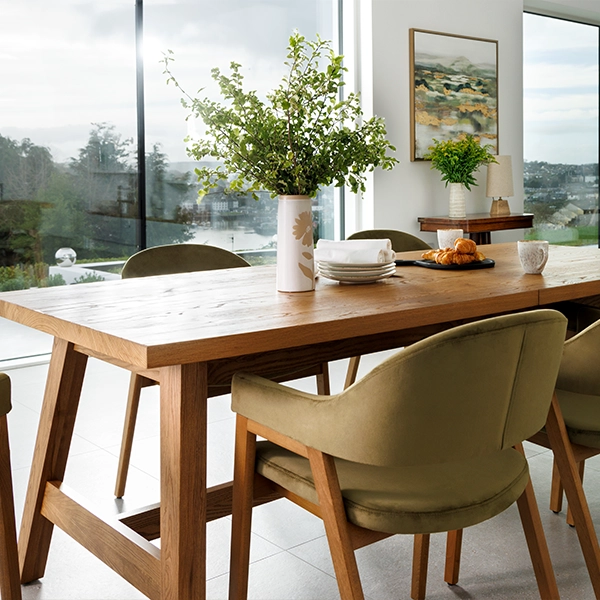
Velvet Dining Chairs
Visually strong but more demanding to maintain.
Best suited to homes where spills are less frequent or where stain-resistant fabric is used.
Velvet Furniture Colour Trends for 2026
Velvet enhances colour depth, so trends are more noticeable than with flatter fabrics.
Current preferences include:
- Earth tones such as olive, rust, and deep brown
- Muted jewel tones like aubergine and teal
- Warm neutrals including taupe, sand, and mushroom
Finishes are moving away from high shine towards softer, more understated textures.
Common Mistakes to Avoid
Many buying decisions focus too heavily on appearance.
Watch for:
- Choosing colour before considering fabric type
- Ignoring durability ratings
- Assuming all velvet behaves the same
- Prioritising softness over long-term support
A good velvet piece is defined by how it performs over time, not just how it looks at first.
Is Velvet Furniture Right for You
Velvet works well if you value texture, depth, and a slightly more expressive surface. It suits spaces where some variation and movement in the fabric are welcome.
It may not be the best choice if you prefer a uniform finish or want something that requires almost no upkeep.
Final Thoughts
Velvet furniture in 2026 is far more practical than its reputation suggests. The key is understanding what sits beneath the surface.
Focus on fabric composition, durability ratings, and construction quality. When those are right, velvet becomes a long-term material choice rather than a short-term design decision.
Related PostsEZLiving Interiors Assistant
Loading chat…
Hi, I'm your personal shopping assistant!
Please enter your details to start the chat
Assistant is typing…Initializing…This chat has closed.
Are you sure you want to end this chat?